
SharkGrip Bathtub Refinishing Coatings
Mako Universal Urethane Paint Accelerator
(No reviews yet)
Write a Review

- SKU:
- Mako-32
- MPN:
- Mako-32
- Condition:
- New
- Availability:
- Ships the same day.
- Weight:
- 2.00 LBS
- Width:
- 8.00 (in)
- Height:
- 8.00 (in)
- Depth:
- 4.00 (in)


Frequently bought together:
Description
Cold Cure Accelerator • 2K Urethanes
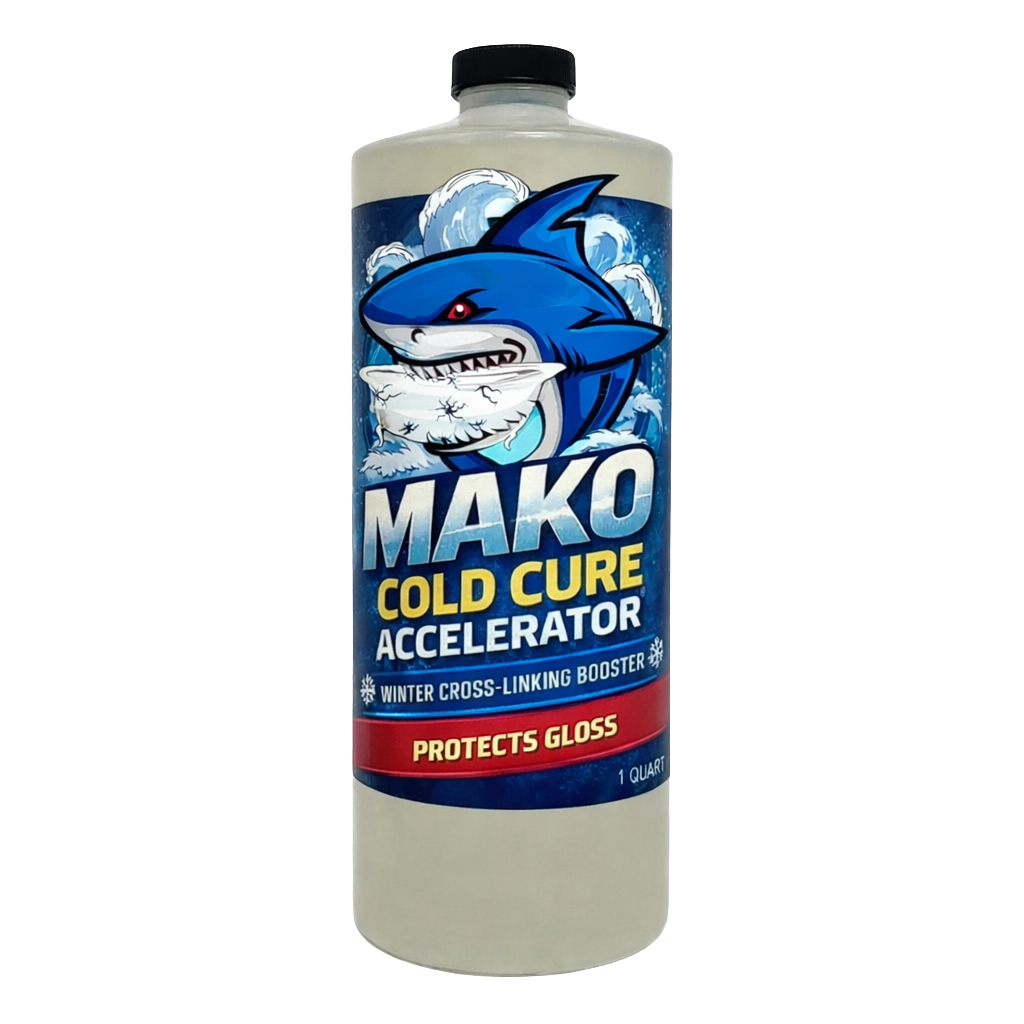
MAKO COLD CURE ACCELERATOR
Faster, reliable cures in cold or humid conditions — while protecting gloss, adhesion, and long-term durability.
Low-Temp Performance
Faster Turnaround
Fewer Callbacks
Industrial-Grade
Why refinishers use a cold-cure accelerator
- Consistent cures in the cold — maintains cross-linking when temperatures drop.
- Faster return-to-service — shortens dry-hard time for better scheduling and cash flow.
- Protects finish quality — helps preserve gloss, flexibility, and chemical resistance.
- Fewer defects & callbacks — less tack time reduces dust/lint contamination.
- Work year-round — extend your season and confidently book winter jobs.
Real-world win: Cold rooms stop being an excuse — you control the cure.
Quick start dosing
Do not overdose. Overuse can reduce gloss or flexibility. Always spray a test panel when temps, film build, or reducers change.
Pro tips (tub, tile & countertop work)
Balance film build & flash
Cold rooms tempt heavy passes — keep overlap consistent and watch flash to protect DOI and leveling.
Mind your reducers
Choose reducer pace for temperature and airflow. Over-reduction to “help” cold atomization can hurt durability.
Control the room
Pre-warm the space when possible, reduce drafts, and filter intake air to minimize lint settling during tack.
Test before you commit
When temps drop or substrates change, do a test panel to confirm flow, gloss, and cure speed.
Quick FAQ
Will it work with any 2K urethane?
MAKO is designed as a universal accelerator for industrial 2K urethanes commonly used in tub, tile, and countertop refinishing. Verify with a small test batch when changing brands or formulas.
Can I add more to go faster?
Not unless you do your own testing. Excess accelerator can reduce gloss or flexibility. Start at the recommended dose and fine-tune in small increments only if needed.
What about humid rooms?
A shorter tack window helps, but airflow and dust control matter more when everything is curing faster. Control drafts and keep the room clean.
Important: Follow your coating manufacturer’s mix ratio and pot life. Add MAKO to the catalyzed batch at the recommended dose. Overuse can reduce gloss or flexibility. Always ensure adequate ventilation and PPE.
Pro Guidance (Read This Once — It’ll Save You Headaches)
We provide a solid starting guide based on what works in the field — but every refinisher knows the truth: your shop, your climate, and your workflow will always require a little dialing-in.
Why your results can vary (and why that’s normal):
- Temperature: 55°F cures don’t behave like 75°F cures.
- Humidity: Florida humidity is not Arizona dry air — and East Coast swings are different than California.
- Air movement: Drafts, fans, and ventilation can speed flash and change how a film lays down.
- Film build: Heavy passes and thin passes cure differently (and trap solvents differently).
- Reducer blend + spray setup: Viscosity, atomization, and turbine/compressor behavior all matter.
- Substrate & prep: What you’re spraying over (and how it was cleaned/dulled) changes everything.
Straight talk: Use our guide as your baseline, then test and adjust like a pro. You can go slightly more or slightly less depending on your mix, your air temp, and your conditions. That’s not a flaw — that’s the art of refinishing.
Best practice: when you change temperature, humidity, reducer pace, or film build, spray a small test area first. If you ever get stuck, reach out — we’ll help you dial it in.
Related Products
Related Products




Paint Can Opener tool
Fuji Spray Products
The Paint Can Opener tool by Fuji Spray Products is a convenient and reliable accessory for opening paint cans effortlessly. This tool is designed specifically for easy opening of paint cans, making...


